
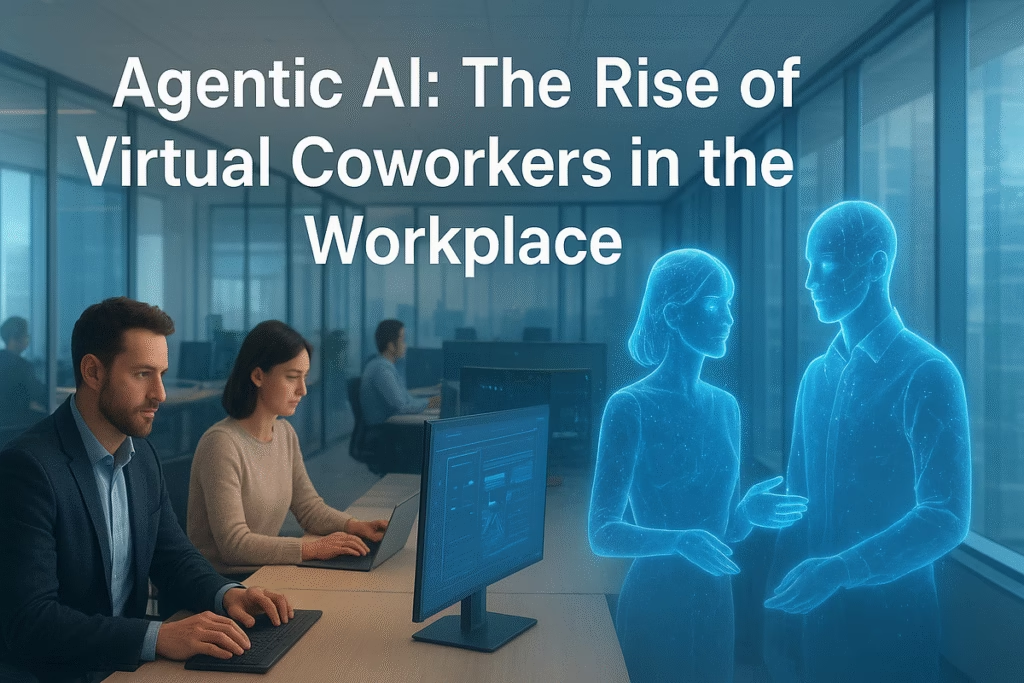
Agentic AI: The 5 Revolutionary Forces
Agentic AI: The Emergence of Self-governing “Virtual Coworkers”. The field of artificial intelligence is rapidly developing, and 2025 appears to be the year of agentic artificial intelligence. If the above years peoples are using chatbots and artificial intelligence assistants, now its time for artificial intelligence agents, which are virtual coworkers who are capable of independent thought, planning, and action in addition to responding to commands.
The term Agentic artificial intelligence comes from the word “agent”, which means something that can take action automatically. Unlike traditional artificial intelligence tools (like ChatGPT or Google Assistant, which gives answer as per your question), Agentic artificial intelligence systems can: Understand goals and context, Plan multiple steps ahead, Execute tasks automatically, and Adapt to changing information.
Imagine having a virtual coworker who can independently manage a project, send emails, run reports, and even coordinate across software tools. Example: Consider stating to your artificial intelligence: “Assist me in launching a new product next month.” Rather than providing guidance in response, it could: Make a schedule for the project,Assign work using technology,Create draft social media posts and emails,Gather data from your dashboard, andlet you know about the project in detail. Agentic artificial intelligence solves all small difficulties you may face.
Why it is trending in U.S? Productivity Pressure now a days most of the companies are facing higher budgets and complex work challenges, businesses are looking for the smarter automation tools that actually save time and money. Artificial intelligence Maturity Tools like ChatGPT and Gemini have evolved. The next step is integrating them into workflow ecosystems — giving them access to calendars, CRMs, and APIs so they can act instead of advise. Startups and Big Tech Are Jumping In OpenAI and Anthropic are testing “artificial intelligence agents” that can take autonomous actions online.
Microsoft’s Copilot Studio lets enterprises build custom artificial intelligence agents for operations. New startups like Devin artificial intelligence (an autonomous coding agent) and Adept (artificial intelligence that controls your computer) are redefining how digital work gets done. The Workforce Shift — Many U.S. businesses are already experimenting with “artificial intelligence teammates” — software that can handle routine tasks like customer follow-ups, data entry, or content generation. It’s not replacing workers; it’s changing how teams collaborate.
How agentic artificial intelligence works. Mainly Agentic AI relies on three key technologies: LLMs (Large Language Models): for understanding context and generating natural responses. Tool Use APIs: to connect to external apps like Slack, Salesforce, or Excel. Memory + Planning Systems: allowing the artificial intelligence to remember steps, learn from results, and adjust strategies. These components make the artificial intelligence capable of acting like a project manager, assistant, or even a data analyst — one that never sleeps.
Real world uses and challenges of agentic AI: Internal IT & employee support at Jamf – Uses an internal artificial intelligence agent that automatically handles IT requests from employees (installing software, fixing access issues, and learning from past actions). Salesforce – an agentic artificial intelligence system that autonomously manages customer interactions and sales tasks, reducing manual data entry and improving response times. American Airlines – Tests artificial intelligence agents that monitor flight operations and automatically suggest rebooking or rerouting options during delays to improve passenger service. Amazon – Uses agentic artificial intelligence to optimize warehouse operations (predicting delays, and better decision making).
There are some problems and challenges that raisese by artificial intelligence explanation. Accountability and Trust – When an AI agent makes a wrong decision, it’s hard to determine who’s responsible the user, the developer, or the company. Data Privacy and Security – Agentic artificial intelligence often access sensitive information to act autonomously, which increases the risk of data leaks or misuse if not properly secured. Job Displacement Fear- As artificial intelligence agents take over routine tasks, many workers worry about losing jobs. Over-Reliance on Automation – Depending too much on AI for decisions can reduce human judgment and critical thinking, especially in sensitive fields like healthcare or finance.
The Future of Work. By 2026, analysts predict that over 30% of U.S. companies will use some form of agentic artificial intelligence to handle digital workflows. It’s not science fiction anymore it’s a quiet revolution already happening in offices, startups, and even homes. Instead of replacing people, Agentic AI may become the ultimate collaborator — the “virtual coworker” who handles the repetitive stuff so humans can focus on innovation, strategy, and creativity. As McKinsey recently put it: “Agentic AI isn’t about automation; it’s about augmentation — extending what humans can do.”
Agentic AI represents the next big leap in artificial intelligence — from passive assistants to active partners. Whether it’s drafting reports, managing workflows, or building code, these autonomous systems are redefining how Americans get work done. And just like the industrial revolution introduced machines that amplified our physical power, the agentic revolution is here to amplify our mental power.
For more: https://www.bloomberg.com/businessweek
https://theflickdaily.com/wp-admin/post.php?post=2618&action=edit