
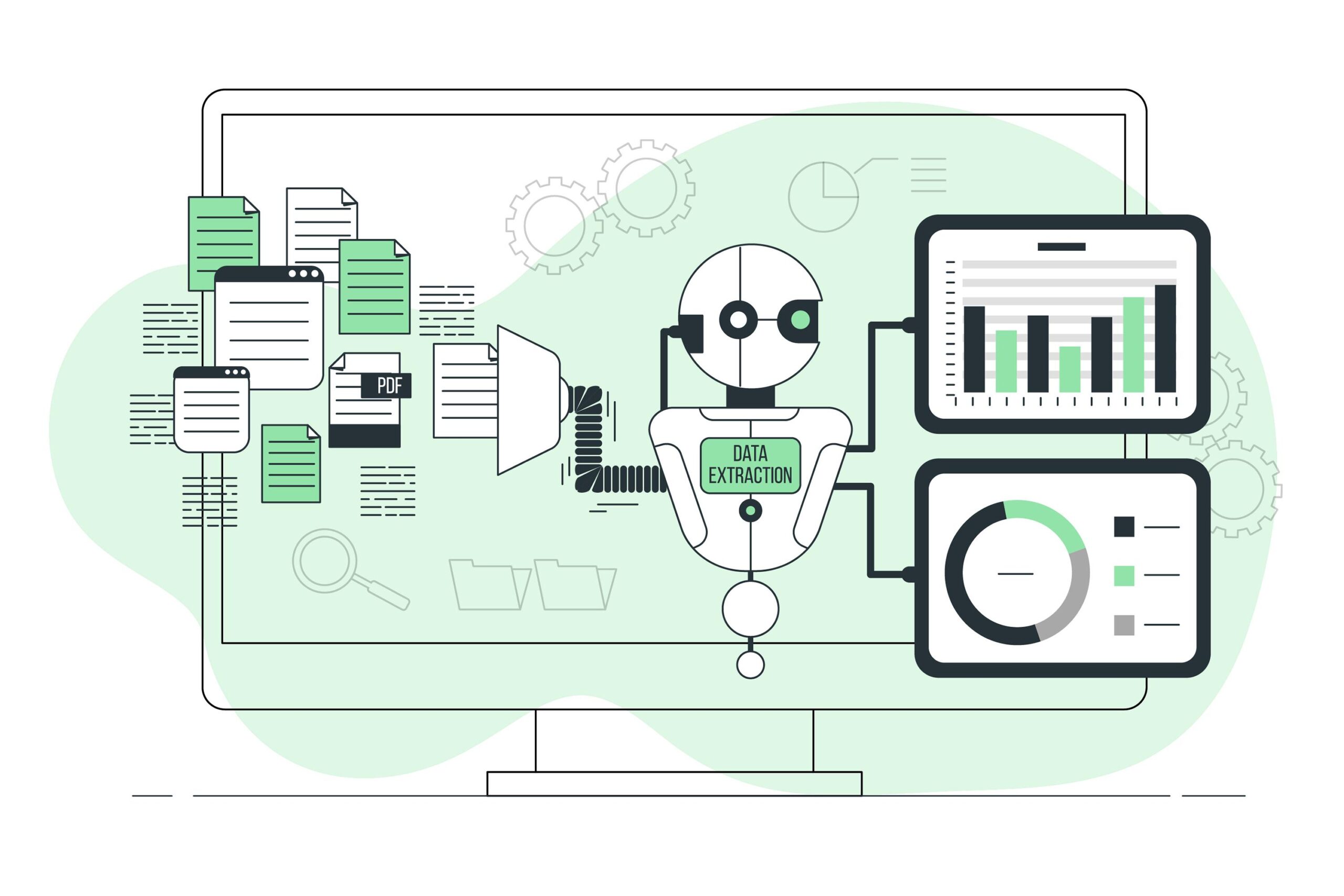
Hyperautomation Technology
Hyperautomation Technology – 7 Powerful Strategies. Today’s business world, staying ahead which means reacting faster, understanding what’s happening right now, and making decisions that keep you moving forward toward success. That’s why Hyperautomation Technology comes. It’s not just to performing things faster but it’s about how work gets done, how data is used, and how businesses can grow fast. Below are seven key strategies that are helping organisations drive real-time insights and growth through this next-gen automation.
Process Mining and Discovery. Before you automate anything, you need to know what you’re automating. Process mining is a strategy that uses data from event logs and systems to discover how work really flows in your business. By mapping the real processes (with all their bottlenecks and delays), companies get a clear view of inefficiencies and then apply automation intelligently rather than guessing.
Why it matters for growth: You identify the most costly or time-wasting workflows. You avoid automating the wrong things (which often happens). You create a foundation for real-time insight, because if you know how work happens, you can detect when it changes. Business insight tip: Treat process mining as the “diagnostic” phase. Once you know that a certain approval process takes days or a supply chain loop is inconsistent, you can apply automation to speed it up and build alerts when things go off track.
Low-Code / No-Code Automation Platforms. Its not necessary for every automation has to built from scratch by engineers. The one strategy that many companies use to low-code or no-code platforms that help business workers build or modify workflows themselves. This helps teams closer to the work to create their own solutions and reduces the time between problem-identification and solution deployment.
Why it matters for growth: Faster time to value: business users can iterate and test. Greater agility: you respond quickly to new challenges. Digital culture: more people in the organisation feel empowered rather than waiting on IT. Business insight tip: choose a pilot area (e.g., expense approval, onboarding) where a business worker can use low-code tools, then grow from there. This builds experience and culture before scaling.
Real-Time Data Integration and Decision Insight. One of the core values of Hyperautomation Technology is integrating data in real time from many sources—systems, sensors, logs—and turning that into decisions. This is more than reporting; it’s operations watching themselves and triggering action or alert when something changes.
Why it matters for growth: You catch things early (inventory issues, delays, customer service issues). You act faster than competitors who rely on weekly or monthly reports. You can generate responsiveness into your business model. Business insight tip: Define key that matter in real time (e.g., time to fulfill, deviation from plan, error rates) and build automated workflows that easily respond when the metric goes off-track.
End-to-End Automation with AI & RPA. Hyperautomation Technology combines tools like robotic process automation (RPA), artificial intelligence (AI) and machine learning (ML) to automate complete workflows—not just isolated tasks. Instead of just automating “task A”, you automate the sequence from “task A” to “task Z”, including decisions and exceptions.
Why it matters for growth: Bigger impact: automating larger workflows helps to larger savings and better records. Consistency: few human errors, more predictable outcomes. Scalability: processes that required many people to work that can be easily done by automation. Business insight tip: Look for workflows where you have many handoffs, many exceptions, or many manual reviews—these are prime candidates to move from simple automation to hyperautomation technology.
Workforce Augmentation and Change Management. Introducing hyperautomation technology is not simply just a technology upgrade—it’s also about how people and processes adapt. One strategy is to view automation as augmentation (helping the workforce) rather than replacement. Training, change-management, and involving humans is the key.
Why it matters for growth: Better adoption: people will support the change not to resist it. Higher productivity: employees shift from manual work to complex tasks. Culture shift: organisation becomes more adaptable, more digital-native. Business insight tip: Communicate early, train staff, celebrate wins from automation. Otherwise even the best tech can fail due to resistance or lack of use.
Security, Governance & Compliance Built-In. As automation improve, so does risk—data leaks, errors, compliance failures. A strategy that must include security, governance and built-in compliance features. This means clear rules for bots, monitoring of workflows, audit trails, and data governance.
Why it matters for growth: Avoid cost and reputational damage from failures. Enables scaling: when governance is strong, you can safely increase automation. Builds trust with customers, partners and regulators is very important. Business insight tip: Always locate your regulatory or compliance needs first before unleashing automation. Build guardrails around bots from day one.
Continuous Improvement & Scaling. Hyperautomation Technology is not a “one-and-done” initiative.The main strategy is build a mindset of continuous improvement: automate, measure, adjust, automate more. Start small first, show early wins, then scale up to more processes and more departments.
Why it matters for growth: Keeps momentum: behind each success builds confidence and capability. Enables compounding: automation in one of the part of the business frees up resources to automate other parts. Prevents stagnation: business stays above of change instead of falling behind. Business insight tip: Publish metrics and dashboards that show automation and Hyperautomation technology benefits (time saved, cost reduced, error rate down). Use that to secure more investment and expand the program.
As business improves faster, more complex and more data-driven, simply doing things better is not enough. You need to operate differently. Hyperautomation Technology offers a roadmap for that difference. By adopting these seven strategies—process mining, low-code platforms, real-time integration, end-to-end automation, workforce augmentation, governance, continuous improvement—you give your organisation the tools to grow smarter, faster and more resilient.
If you’re ready to move from “how do we catch up?” to “how do we lead?” then this is your moment. The future of business growth is real-time, data-driven and ever-adapting. Let automation and Hyperautomation technology be your partner in that journey.
For more: https://aimagazine.com/
https://theflickdaily.com/wp-admin/post.php?post=2389&action=edit