
(Credit to Image Owner)
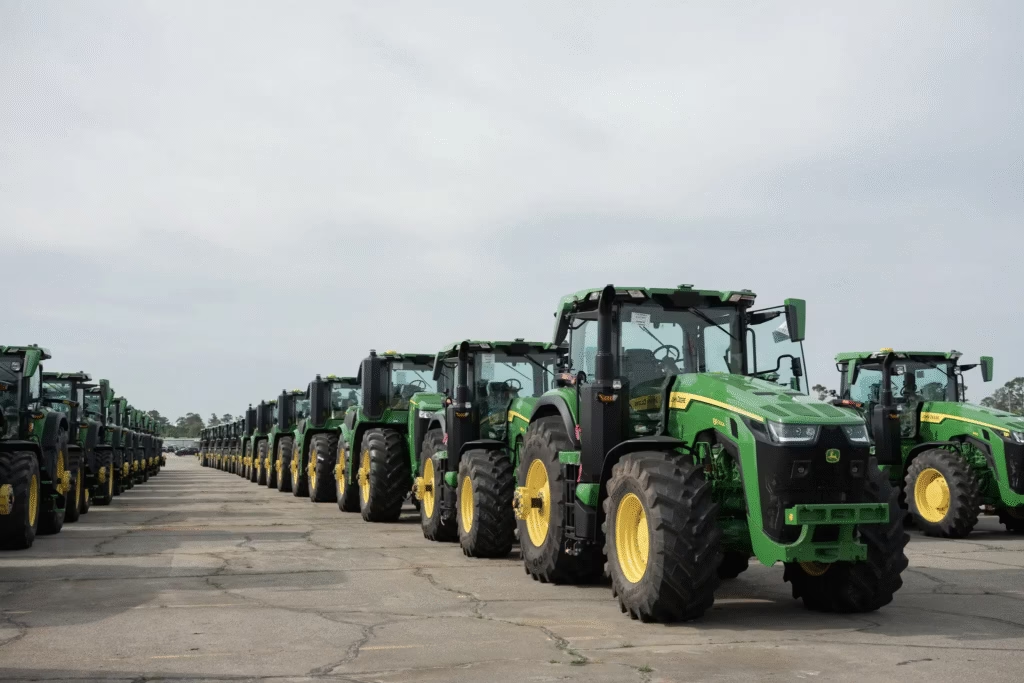
John Deere, the green-and-yellow icon of American farming power, is fighting escalating pressures—from devastating tariffs and weakening farm profits to supply chain shocks and factory cost spikes. As one of the most recognizable U.S. makers, its recent struggles are an emblem for a wider crisis for the backbone of rural America.
Tariffs Crushing Margins:
- Tariffs on steel and aluminum, the core parts of heavy machinery, have already hit John Deere by about $300 million in 2025, and another $300 million is on the way by the end of the year.
- The third-quarter net income of the company fell from $1.73 billion to $1.29 billion, an eye-popping 26–29% decline, while revenue fell by around 9%.
Farmers Feeling the Squeeze:
- Farmers are not exempt. Retaliatory trade barriers and lower crop prices have severely eroded farm revenues, leading many to postpone equipment purchases or buy older models.
- Sales once skimmed by price-sensitive buyers at auctions now show desperation among loyal John Deere buyers.
Workforce & Factory Impacts:
- This financial pinch has spawned layoffs at Deere’s heartland factories-238 jobs were lost this summer in Illinois and Iowa.
- The negative ripple continues: cautious farmers, weakening commodity markets, and elevated prices are deepening concerns for the manufacturing and rural sectors alike.
Changes in Supply and Strategic Reaction:
Deere is investigating major supply chain changes to help navigate this whirlpool. Plans call for renegotiating supplier contracts, taking advantage of USMCA tariff exemptions, and moving some production to Mexico. However, as demonstrated when Trump threatened to impose 200% tariffs if Deere moved production out of Iowa, such actions could spark political backlash.
Original Insights:
- Initial Thoughts: Icon Under Siege
Unexpectedly, protectionist policies intended to protect American industry are undermining John Deere, a company with more than 75% of its assembly located in the United States and rooted in the agricultural heartland.
- A vicious cycle:
tariffs increase manufacturing costs, which in turn raise the cost of equipment, which causes farmers to put off purchases. Long-term client relationships are weakened as a result, forcing Deere to modify its pricing and strategy.
- Supply Chain Vulnerability
Even with a robust U.S. manufacturing base, Deere’s reliance on foreign input components makes it susceptible—60% of its calculated tariff costs are due to products from the EU, Mexico, and China.
- Political Tightrope
Shifting production to save costs might boost margins but could invite retaliatory tariffs and political blowback—a thin tightrope walk demanding skillful policymaking and adaptive business strategy.
- Hope in Innovation
Deere’s history of innovation—from intelligent farming robots to precision ag—can potentially be the ticket to riding out the storm. Shifting gears into high-value segments can make up for volume losses in traditional equipment lines.
Conclusion.
John Deere, the tractor giant equated with American agriculture, is now confronted by challenges resonating far beyond its factory aisles and orchard rows. Tariffs, trade wars, and tight farm purses imperil the very pillars of U.S. agricultural manufacturing. But even in the adversity, there is opportunity—through strategic resilience, supply chain agility, and sustained innovation, Deere can still plow a way back to prosperity. Its destiny is linked with that of American farmers, technology adoption, and policy transformation. Their subsequent actions will determine not only the future of the company, but rural America itself.